Prambanan Temple Reliefs and the Stories Carved in Stone

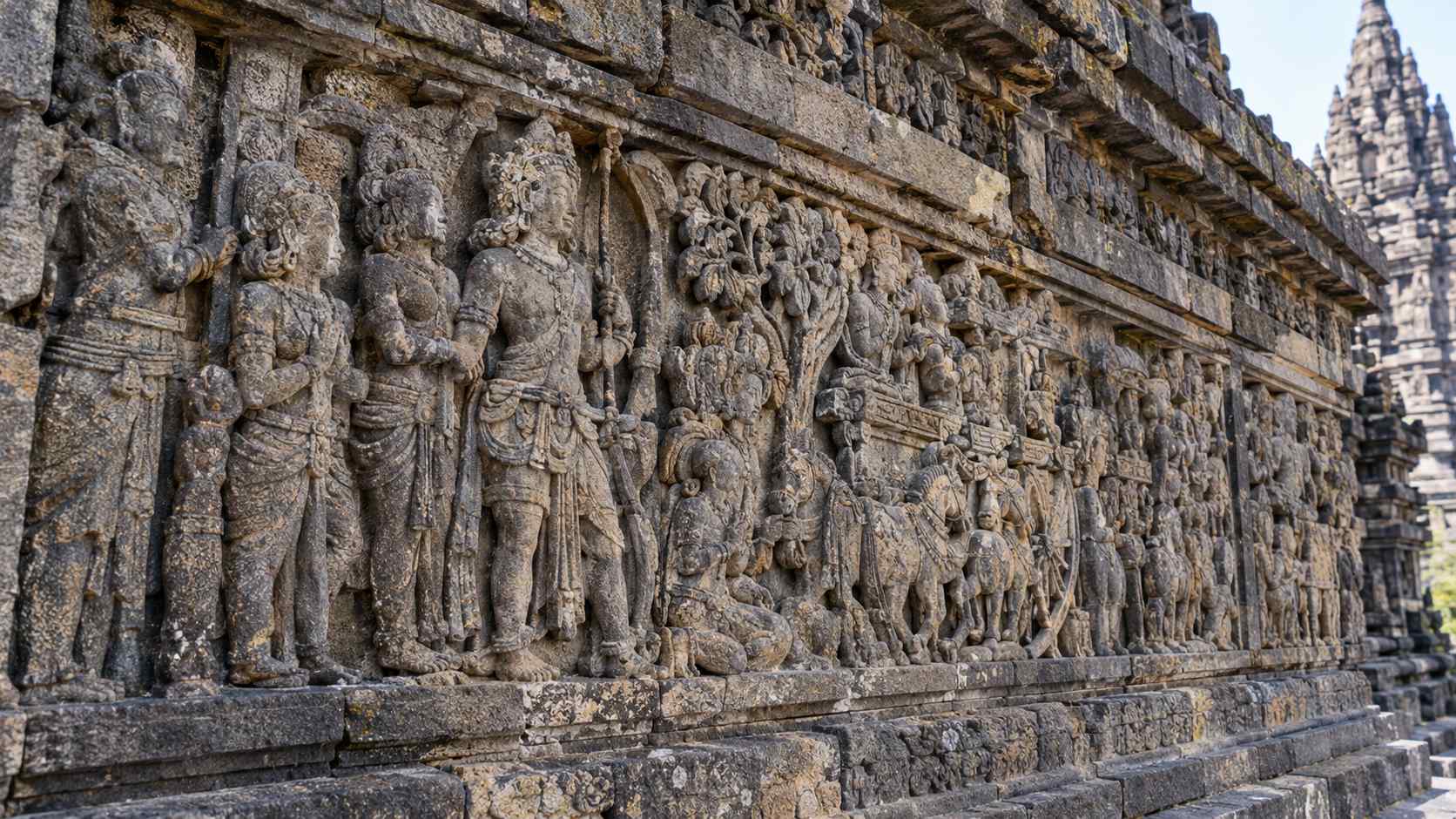
The Prambanan temple reliefs turn solid walls into a stone storybook. Craftsmen carved scenes of gods, heroes, and animals more than a thousand years ago. However, many visitors rush past the panels and miss their beauty. Therefore, this guide explains what the reliefs show, how carvers made them, and how to read them. Moreover, it shares simple tips for enjoying every detail.
Why the Reliefs Matter
The carvings do more than decorate the temples. In fact, they teach sacred stories to people who once could not read. As a result, each panel works like a lesson in stone. In addition, the reliefs show daily life, clothing, and music from ancient Java. For a wider view of the design, read this guide on Prambanan temple architecture explained for curious travelers.
Reliefs on the Shiva and Brahma Temples
Long panels wrap around the inner walls of the Shiva temple. Specifically, they tell the first half of the Ramayana, and the story continues on the Brahma temple. Consequently, you follow the plot as you walk around the platform. Meanwhile, the figures move with lively gestures that make the scenes feel dramatic.
Reliefs on the Vishnu Temple
The Vishnu temple carries scenes from the life of Krishna. For example, you can spot the young god among cowherds and animals. Likewise, the panels show playful moments and heroic acts. Because of this variety, the temple offers a different mood from its neighbors.
Guardians and Celestial Figures
Look beyond the long stories and notice the smaller carvings. Lions sit in niches and guard the sacred space. Furthermore, celestial beings appear in graceful poses, with flowing scarves and delicate hands. Between them, kalpataru trees symbolize abundance, while kinnara and kinnari, half bird beings, appear in pairs. Together, these figures create a rich visual rhythm.
Carving Techniques and Skill
Builders used volcanic andesite, a stone that holds fine detail. After stacking the blocks, craftsmen carved the surfaces in place. As a result, the patterns flow smoothly across joints. In addition, the carvers used depth and shadow to make figures stand out. Even after centuries of weather, many faces and hands remain clear.
How to Read Prambanan Temple Reliefs
Start at the stairway and walk clockwise, as pilgrims once did. Then follow each panel from right to left, since the story unfolds in that direction. Next, pause at key scenes and look for repeating symbols. Finally, compare the carvings on neighboring walls, because details often echo each other.
Tips for Seeing the Details
Morning and late afternoon light create soft shadows that reveal depth. Besides, these hours bring cooler air and fewer crowds. Wear light, modest clothing and closed shoes with good grip. Bring water, a hat, and sunscreen, since shade is limited. Moreover, avoid touching the stone, because oils from hands damage the surface. Because access rules can change, confirm current details before you go.
Plan Your Visit with Local Experts
A guide can explain each scene in minutes. That is why Borobudur Tours can help. Their team offers organized packages, experienced guides, and flexible options for couples, families, and groups. As a result, you can focus on the carvings instead of the schedule.
Conclusion
The Prambanan temple reliefs combine story, skill, and symbolism in every panel. Consequently, a slow walk reveals far more than a quick photo. In addition, a guide brings the characters to life.
Ready to explore? Visit Borobudur Tours today and reserve your trip for a day you will remember.
